Skip to content

From ticket to solution · Part 2 of 2

Evidence, not claims. How we review what the agents build.

Every test was green. The app would still have been wrong in production. We follow the same ticket through build, review and pull request, and show what it takes for you to trust the result.

By Niklas Andervang8 min read

Step 4 of 6 · Build

The build took eight minutes.

With an approved plan, writing the code is the easy part.

In part 1, a ticket with nothing but a title became an approved plan with nine requirements. Three steps remain: build, review and pull request.

The build agent changed 2 components and did not need to create a new one. It wrote 14 new tests. All 6,902 tests in the project passed. It took 8 minutes and cost $0.88.[3]

The checks were actually run. The agent did not merely claim to have run them. One of them found a fault in a new test, and the agent fixed it.

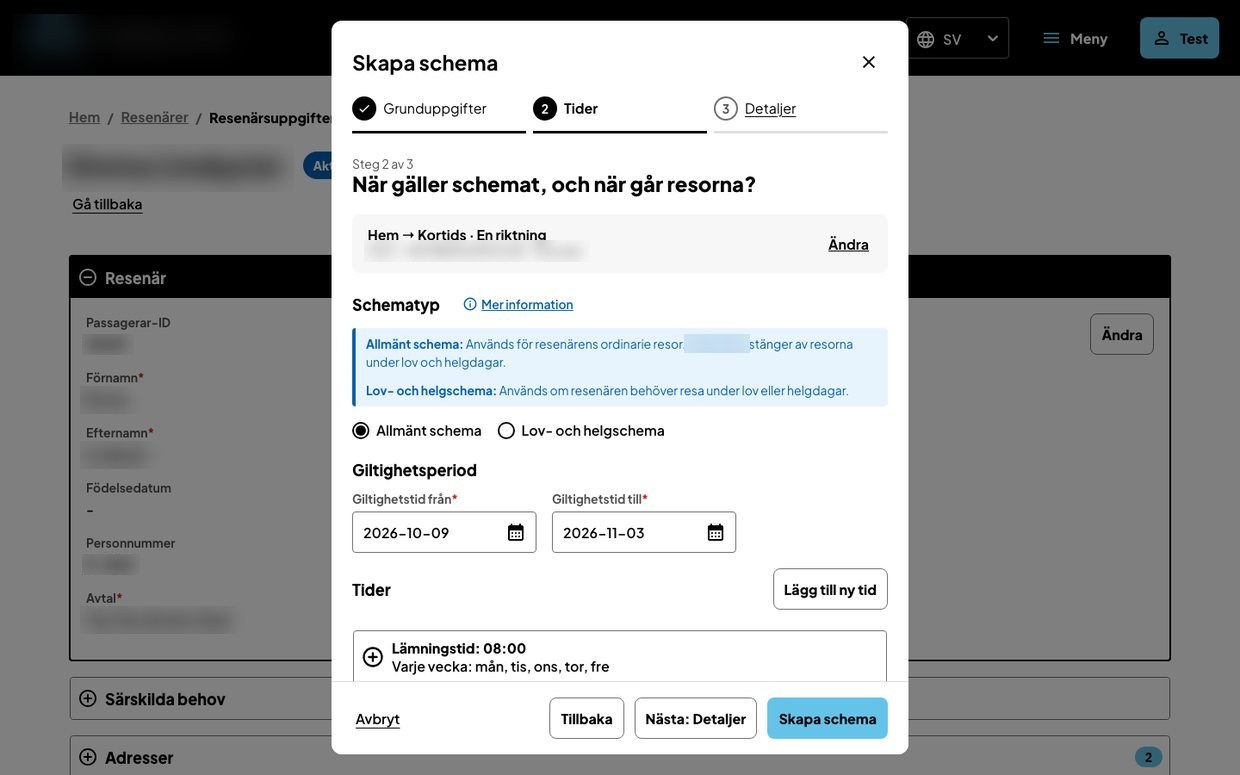
Before
The app before the change: two options with no explanation.

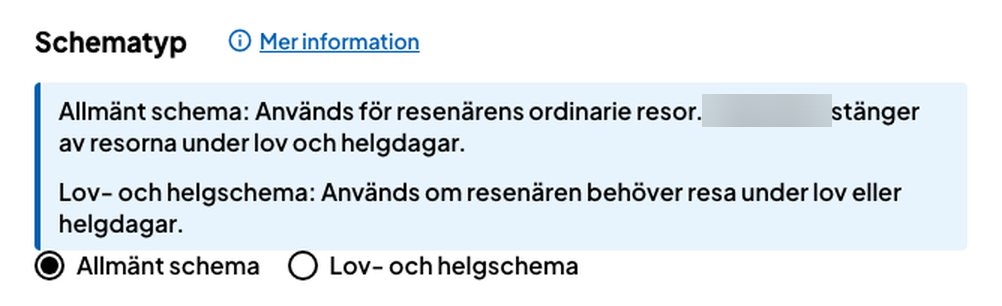
After

The app after the change: new names and an open information panel that explains the difference.
Before and after in the real app, on test data. The customer’s logo and details are masked.

Step 5 of 6 · Review

The review is always done in a new session.

Whoever built it should not review it. That goes for agents too.

An agent that has just built something has already decided that it is right. So we start a new agent that knows nothing about the build. It is given the ticket, the plan and the change. It may judge, but it may not change code.

The verdict was “fix first”: 1 thing that must be fixed, 3 that should be fixed and 5 worth considering.

The one that had to be fixed was something no test could see. The texts in the app are fetched from a translation service when the app is deployed. The new texts existed only in the code. In production, users would have seen the old text, even though every test was green.

Green tests are not the same as right.

The build agent had itself chosen to put the texts in the code, so it did not see that as a problem. The reviewer compared the work with the plan, where the step was written down.

The UX agent looks at pictures, not at code.

A change you can see needs evidence you can see. We take screenshots before and after, at seven screen widths, and let a tool compare them. 22 of 29 pictures had changed, all of them on purpose.

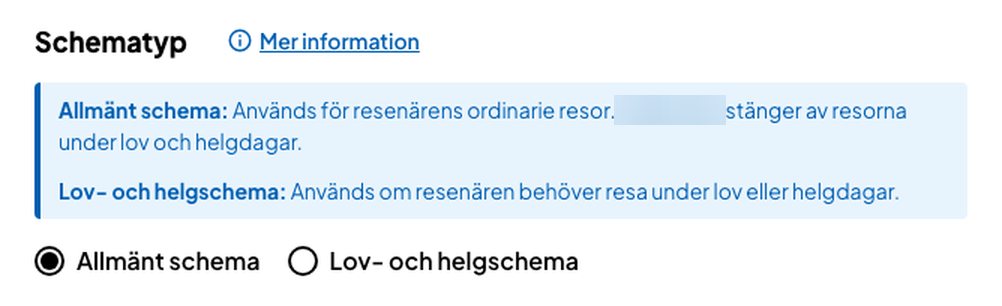
A UX agent then judged the pictures. It found two faults that only show in a picture: the information panel sat flush against the options, and the names in the panel were not in bold. After the fix, the score went from 5 to 8 out of 10.

Round 1

Round 1: the information panel sits flush against the options and the names are not bold.

Round 2

Round 2: space between the panel and the options, and bold names.
The same part of the form before and after the UX agent’s review.
““It works” is a claim. Evidence has levels.”
Niklas Andervang · Andervang Consulting

The evidence

Every requirement points at evidence.

The nine requirements from the plan travel all the way in one table. We call it the receipt.

After the review

  • Met4 of 9
  • Partly met4 of 9
  • Not met1 of 9

After the fixes

  • Met5 of 9
  • Partly met3 of 9
  • Moved to the release1 of 9

What is only partly done is reported openly:

  • Keyboard and screen reader are tested, but there is no automated accessibility test.
  • The texts exist in three languages, but two of the translations have not been reviewed by a person.
  • The examples in the component library are fixed but have not been checked visually.

That is exactly what makes the rest credible. A receipt where everything is green says less than one that shows what remains.

In depthFour levels of evidence
  • Level 1

    Executed

    A test was run and passed.

  • Level 2

    Observed

    A screenshot, before and after.

  • Level 3

    Reasoned

    Argued from the code. Not shown.

  • Level 4

    Claimed

    The agent says so. That does not count.

How far we trust a change is set by a fixed rule, not by how confident the agent sounds. Read more about responsible AI.

Step 6 of 6 · Pull request

The pull request carries the evidence.

The last step is for another developer to approve the change. By then the evidence should already be there.

A pull request is a change put forward for review before it goes into the code. Ours says what changed and why, gives eight steps for anyone who wants to test it themselves, and lists the checks that were run, with their results. The reviewer does not have to ask.

All tests in the project
6,902 passed
Affected tests again, after the last change
1,143 passed
Pictures before and after · all intended
22 of 29 changed
The UX agent’s score
5 → 8 of 10
Automated checks
17 of 17 green
By another developer
1 approval
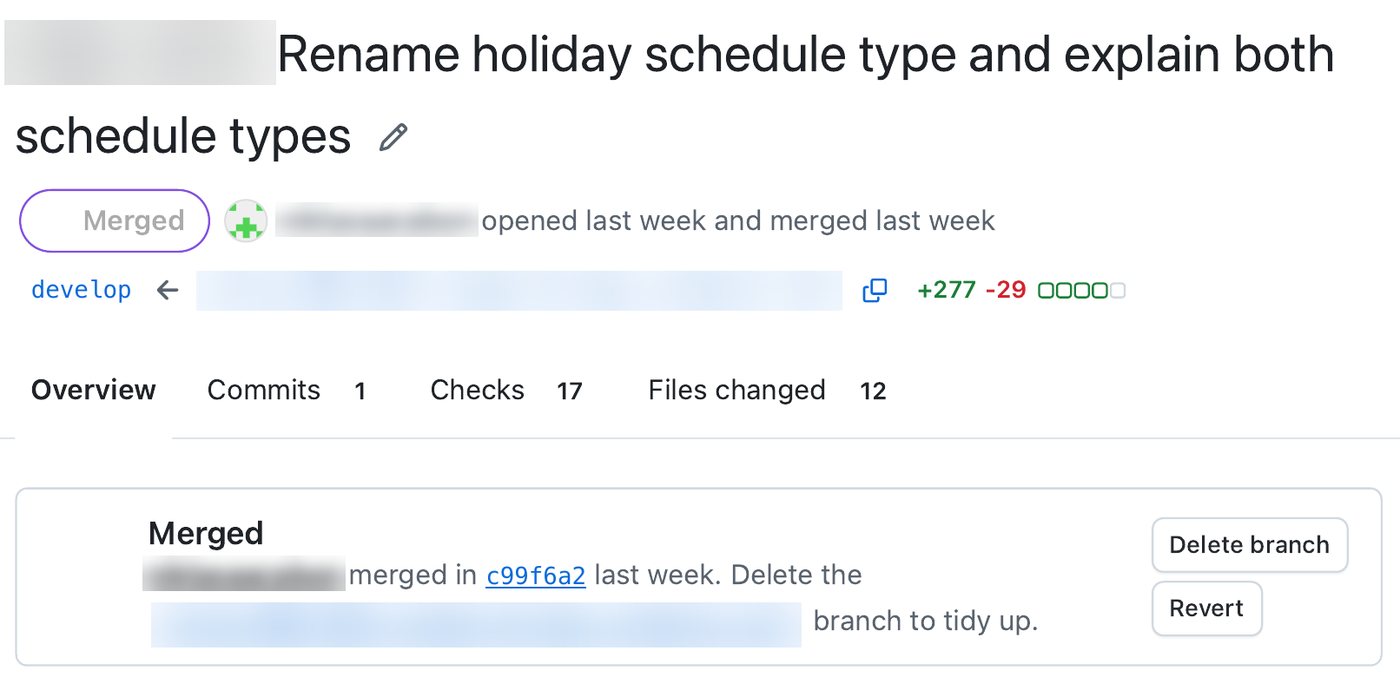
Screenshot of the pull request header with the status Merged, 1 commit, 17 checks and 12 files changed. (opens full size in a new tab)
The real pull request, approved and merged: 12 files changed and 17 checks. Names and ticket numbers are masked.

Here too, what is open is written down. An AI review inside the pull request found one low-priority item that is still open, and syncing the translations is marked as a step in the release.

The result

Six faults were caught along the way.

Each step caught something the next step would otherwise have had to deal with.

Faults caught at each step
The ticket checkA ticket marked ready with nothing in it
The plan agentThe change applied to 9 places, not 1
Automated checksA fault in a new test
The code reviewUsers would have seen the old text
The code reviewA broken mobile example and mixed wording in a translation
The UX reviewA panel flush against the options, and bold text that did not show

The agents worked for 44 minutes and the AI cost came to $9.90.[3] Planning and code review accounted for 53 per cent of it. So more than half went on thinking and checking, not on writing code.

In depthTime and cost per step
Time and AI cost per step
Plan: ticket check, reading the code, rewriting the ticket6 min$2.00
Build and checks8 min$0.88
Code review in a new session8 min$3.24
The product owner’s decisions, picture comparison, UX review and fixes22 min$3.78
Total44 min$9.90

The developer wrote 4 instructions. The agents made 228 tool calls. The figures are the AI cost of one ticket and say nothing about what an engagement costs.

Why it holds

Trust is built in layers.

No single step creates trust. The layers do, together.

Each layer only holds if the one below it holds. Take one away and everything above it falls. We borrowed the picture of a pyramid from Lauren Tan’s talk on how a team can ship large amounts of agent-written code without losing quality.[2]

  1. The person

    A person decides, on evidence. Here: 10 boxes before the build and 1 approval after.

  2. Independent review

    A new agent and a UX agent. Whoever builds never grades their own work.

  3. The receipt

    Every requirement points at evidence. Here: 9 requirements.

  4. Tests

    Tests that raise the alarm when something breaks. Here: 6,902 passed, 14 were new.

  5. The foundation

    Shared instructions, tools and rules. No agent improvises.

“All AI code is slop. Until it’s verified.”
Niklas Andervang · loosely after Lauren Tan

Getting started

Start with the foundation. Then the speed.

You do not need everything at once. Three steps are enough to begin.

A large study from DORA, with nearly 5,000 professionals, concludes that AI above all amplifies what is already there. Strong ways of working get stronger and weak ones get weaker.[1] That matches our experience.

  • Step 1

    Good tickets

    Introduce the ticket check. It pays off even without agents.

  • Step 2

    A receipt

    Let every requirement point at evidence. Start in a single project.

  • Step 3

    Agents in parallel

    Add review in a new session, and keep the person who approves.

Want to know where you stand today? Start with the team self-assessment.

Questions and answers

What you usually ask about review and evidence.

Why should the review be done in a new session?

The agent that built the change has already decided the solution is right, and it carries all its own assumptions. A new agent sees only the ticket, the plan and the change, which is what a human reviewer sees, and compares the result with the plan rather than with the intention.

Isn’t it still the same AI reviewing itself?

Yes, and at root it has the same blind spots. That is why a new session is not enough on its own. We add a UX agent that judges screenshots, automated checks and a person who approves.

What does it cost to work this way?

In this ticket the agents worked for 44 minutes and the AI cost came to $9.90. More than half went on planning and reviewing. The code review, which found the fault the tests missed, cost $3.24.

What happens when the agent is wrong?

Then the fault should be caught at a step before it reaches your users. Here, six faults were caught along the way: by the ticket check, by the plan agent, by the automated checks, by the code review and by the UX review.

Are the agents allowed to merge changes themselves?

Not in this flow. A person approves the plan and another developer approves the change. Some tasks we do let agents handle on their own, such as bug analysis, research, audits and scheduled jobs.

Sources

What this article is built on

  1. [1]DORA and Google Cloud, “2025 State of AI-assisted Software Development”, September 2025. dora.dev
  2. [2]Lauren Tan, “All Code Is Slop (Except Mine)”, AI Engineer Code Summit, November 2026. youtu.be
  3. [3]Session log, git history, test runs and the pull request for the ticket, November 2026. The customer is anonymised.

About the numbers: the figures for the ticket come from the session log, the git history, the test runs and the pull request. The customer is anonymised, the screenshots are masked and the app ran on test data.

Which ticket would you give the agent tomorrow?

Tell us what a ticket looks like in your organisation today. We will show you how we would take it from backlog to pull request, with the evidence along the way.