

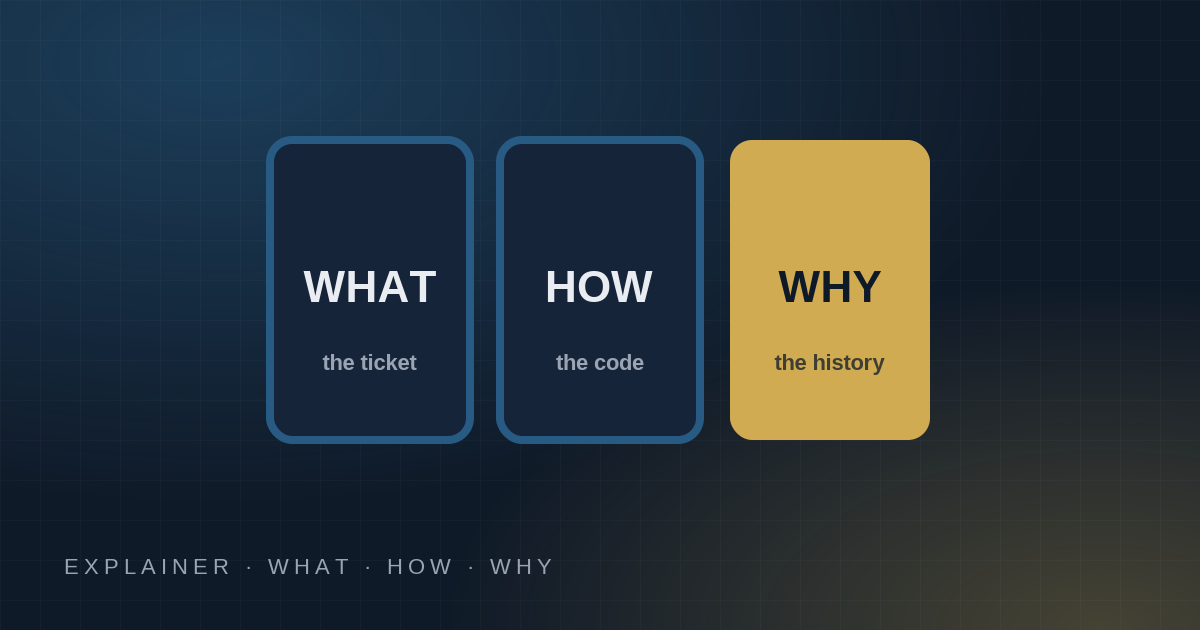
When an AI agent produces something odd, the instinct is to blame the model. More often the problem is the input. An agent needs three kinds of context to do good work, and they live in three different places.
- AI
- Ways of working
- Explainer
In this article3 sections
The three kinds of context#
- What lives in the ticket: what should be done, or what the bug is, and when it counts as finished.
- How lives in the code: the truth about how the system actually works today.
- Why lives in the history: discussions, decisions, commit messages and earlier pull requests.
Agents are good at reading code, so the how is usually covered. The what and the why are where things go wrong.
A bad ticket and a good one#
Bad: “Fix the login.”
Good: “Customers should be able to log in with a mobile ID app on their phone. Done when error messages are understandable and tests exist. See docs/auth.md.”
The second ticket gives the agent a goal, a definition of done and a pointer to the right documentation. It also gives the reviewer a checklist: every acceptance criterion becomes something to verify.
What teams can do#
- Use a ticket template with a user story, acceptance criteria and links to documentation.
- Record important decisions where agents can find them, close to the code.
- Write commit messages and pull-request descriptions that explain why, not just what.
This is where product owners make the biggest difference. Clear requirements are the cheapest improvement there is, and they help people just as much as agents.