

Accessibility · Article
The power of design systems and reusable components
By Niklas Andervang12 min read
A seamless user experience is crucial for any product. Design systems have become a powerful way to ensure consistency, efficiency and quality across applications. But what makes them so effective, and how do they improve workflows, user experience and accessibility? Here, we explore why design systems are indispensable to your design and development process.
- UX
- Design System
- Accessibility
In this article8 sections
What is a design system?#
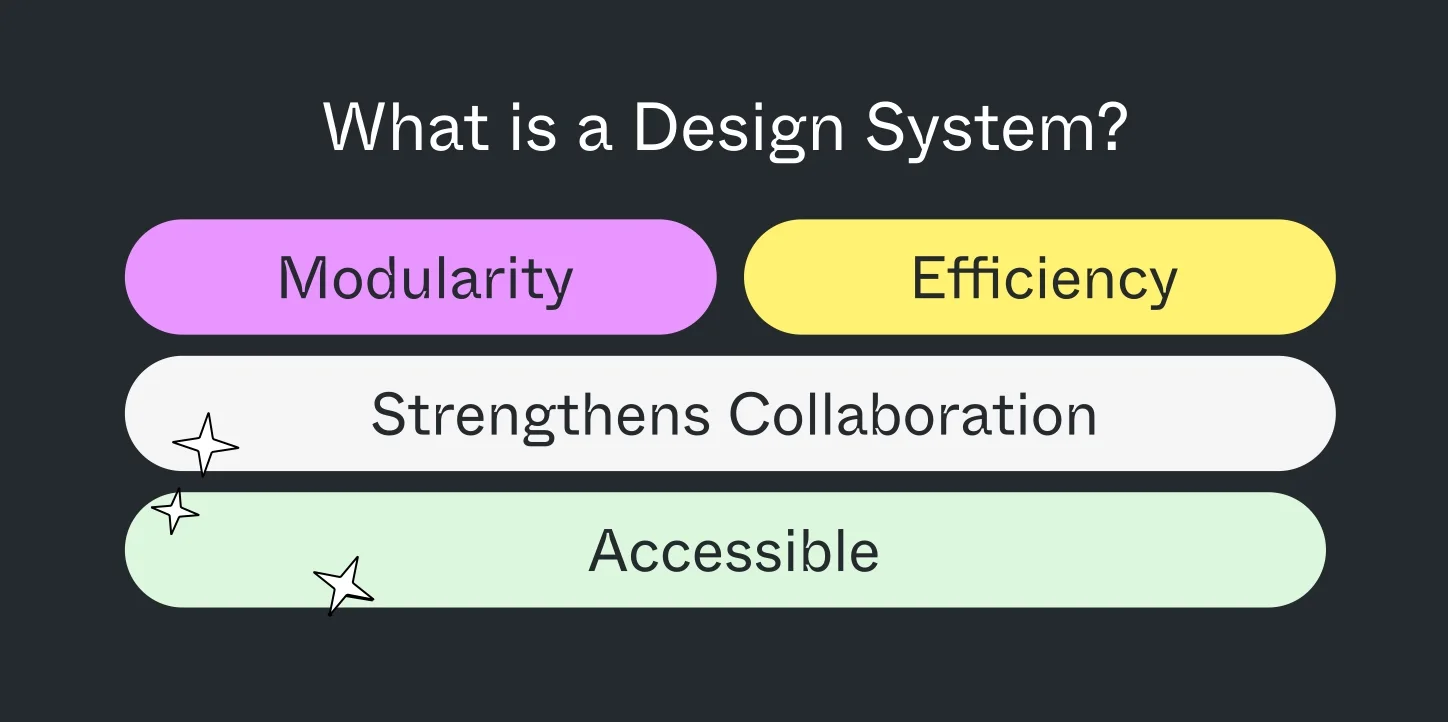
A design system is a collection of reusable components, patterns and guidelines that make it simpler to create cohesive, user-friendly interfaces. It acts as a unified framework that gives developers, designers and product owners a “single source of truth” for every element in a product.
Because it is built on modularity, a design system establishes a shared language that encourages collaboration and keeps teams consistent. Elements can be reused and scaled across projects, which removes unnecessary work.
Design systems are not static. They evolve with technology, industry standards and accessibility requirements, and teams can keep improving and adapting the system to meet new expectations and take advantage of new technical opportunities.
A robust design system also strengthens collaboration between designers and developers. It becomes a shared platform to which every discipline can contribute, refining the system over time. The result is innovative, adaptable and inclusive digital products.
Finally, design systems drive efficiency. With pre-built components, developers can spend more time on new features and less on building basic UI elements from scratch. This shortens development time and makes better use of resources.
Even for smaller teams, a basic design system can improve efficiency and collaboration, and it makes the system easier to scale and evolve over time.
Accessibility and inclusion#
One frequently overlooked benefit of design systems is the part they play in promoting accessibility. When accessibility is built directly into the components, teams create consistent, inclusive experiences that meet industry standards such as WCAG.
Successful examples#
Case study: the Swedish Public Employment Service (Arbetsförmedlingen)#
One inspiring example of a successful design system is that of the Swedish Public Employment Service (Arbetsförmedlingen), which prioritises accessibility, documentation and ease of use. Its extensive library of reusable components supports Sweden’s push for digital inclusion in public services.
SJ’s design system#
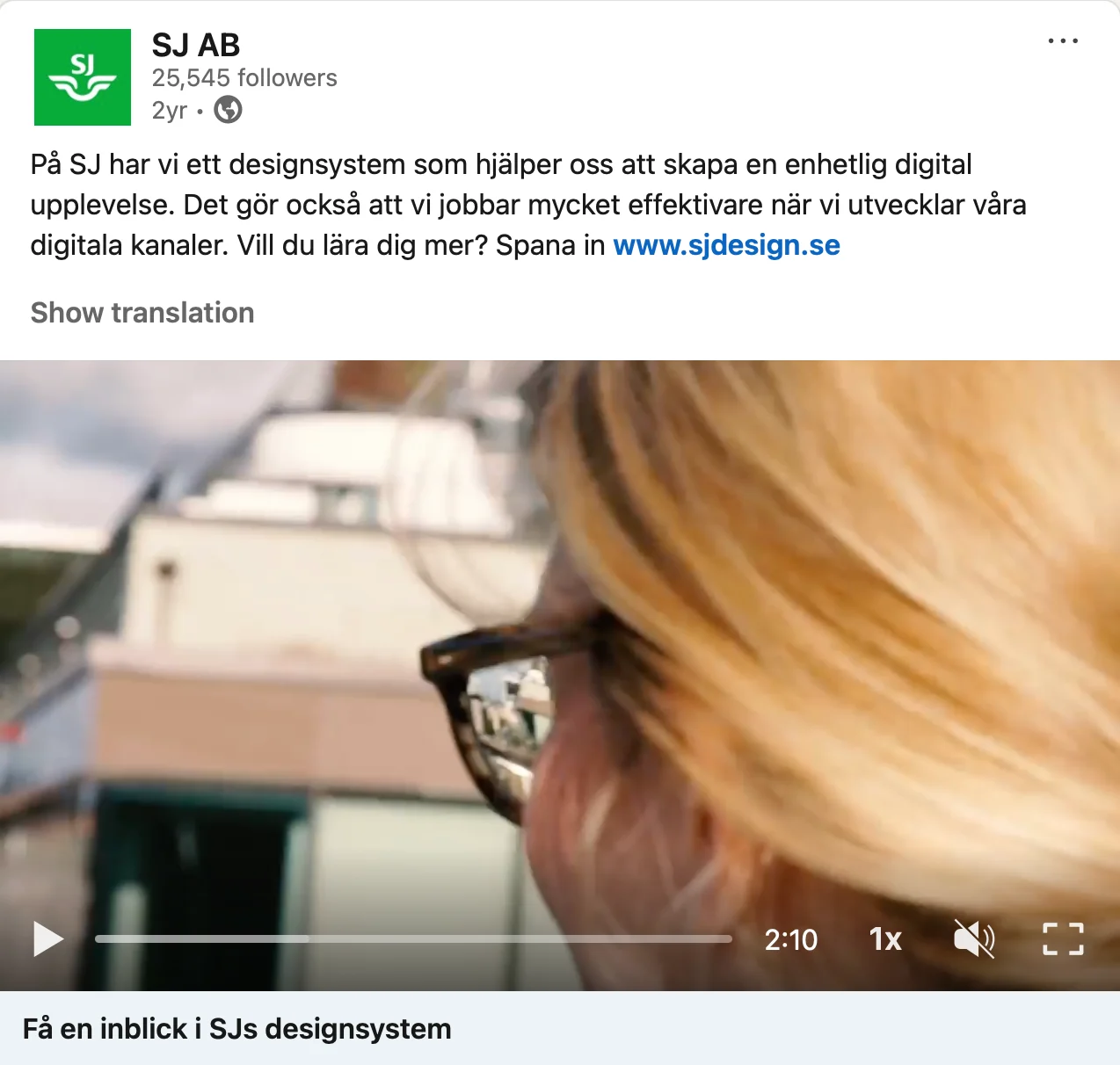
Much as Volvo decided in 1959 to release the patent for the three-point seatbelt to save lives, many companies today share their design systems openly to help others create better digital experiences. One example is SJ’s design system, to which team members from Andervang Consulting contributed.
Skandia and Andervang Consulting#
At Skandia, consultants from Andervang Consulting worked as part of the core design system team and played a key role in creating and improving accessible, user-friendly and well-designed components. Our contributions included:
- Component development and enhancement: designing and developing a wide range of components, such as buttons, forms and navigation elements, with a focus on accessibility, usability and visual consistency.
- Accessibility expertise: implementing WCAG standards and automated testing to ensure long-term accessibility.
- Documentation and training: writing comprehensive guidelines and running training to ensure the design system is used and implemented correctly.
- Testing and quality assurance: rigorous testing procedures to ensure high quality and a smooth user experience.
Key benefits of a design system#
- Efficiency through reuse: save time and resources by using pre-built components such as buttons, cards and forms. Production speeds up, and designers can focus on solving complex problems instead of routine tasks.
- Central control and quality assurance: managing components centrally ensures consistency and makes updates quick. Quality assurance is simpler because standard components are already tested and maintained.
- Scalability and collaboration: onboarding new team members is simpler, and established guidelines are easier to follow. Structured documentation and shared workflows improve cross-functional collaboration.
A design system is not just an investment in structure and organisation. It is an engine for innovation, collaboration and sustainable growth.
FAQs about design systems and reusable components#
How do design systems help with project timelines?
Reusing components from a design system can significantly reduce development time. Developers can focus on building new features instead of recreating UI elements, which means faster delivery and better time management.
What role does a design system play in accessibility?
A design system helps ensure that accessibility is maintained across all components. When accessibility is built directly into the system, you create consistent, inclusive experiences that meet industry standards such as WCAG.
Do design systems work for small teams or start-ups?
Yes. Even small teams benefit from the efficiency and consistency that design systems offer. Starting with a simple set of components and scaling over time can improve collaboration and save time.
Sources
What this article is built on
- [1]Accessibility in Design Systems: A Comprehensive Approach Through Documentation and Assets supernova.io
- [2]How to Create Accessible Design System Components supernova.io
- [3]A Complete Guide To Accessible Front-End Components smashingmagazine.com
- [4]Swedish Public Employment Service Design System designsystem.arbetsformedlingen.se