

AI · Article
Don’t use a Ferrari to fetch the milk: choosing the right AI model
By Niklas Andervang3 min read
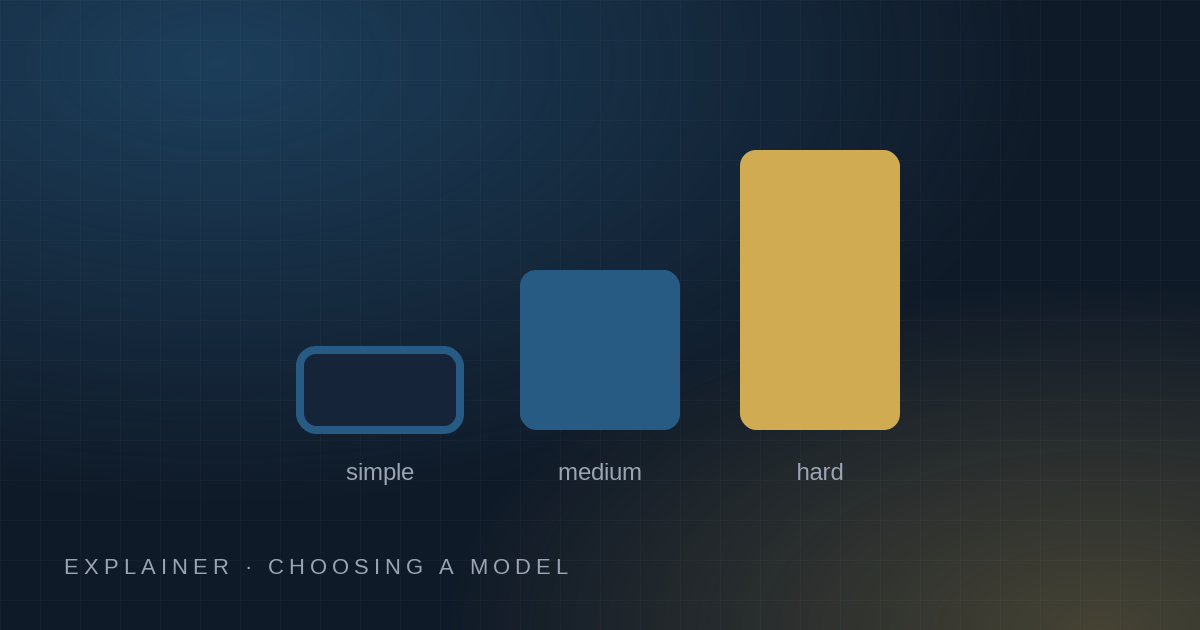
It is tempting to use the most capable model for everything. It is also slower and more expensive, and for most everyday tasks it brings no benefit. A simple rule of thumb goes a long way.
- AI
- Cost
- Explainer
In this article3 sections
Match the model to the task#
- Simple – text changes, tests for existing code, documentation: a fast, low-cost model.
- Medium – a new component, an API endpoint: a mid-range model.
- Hard – architecture, a tricky bug, anything security-related: the most capable model available.
Measure what each task costs#
Track which model was used and how many tokens each task consumed. After a few sprints the pattern becomes clear, and so does the cost per delivered ticket. It turns a vague feeling about AI spending into something a team can manage.
Spend tokens on verification#
The most valuable use of tokens is often not writing more code but checking it: running tests, reviewing the result against the ticket, comparing before-and-after screenshots. A cheaper model that writes the code plus a careful review step usually beats an expensive model left unchecked.
Speed comes from trust, and trust comes from verification.